Success message
Error message
October 24, 2024
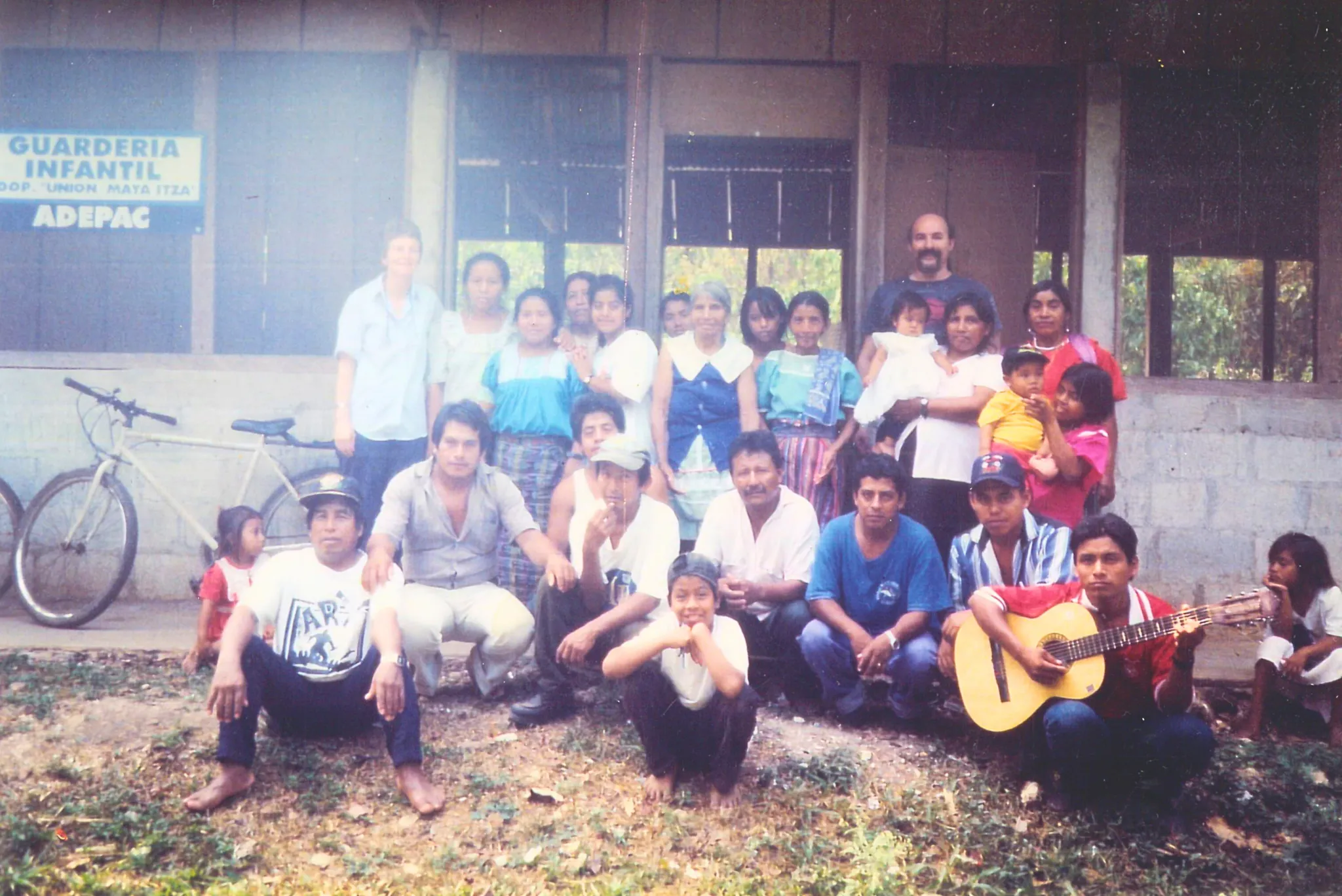
In the mid- 1980s Laurie Melrood and Blake Gentry were on the Texas/Mexico border working with the US Sanctuary Movement. People were coming north in large groups fleeing places like El Salvador and Guatemala, where the United States funded and trained militaries. In Guatemala it was particularly severe. A Truth Commission report issued several years later would state that more than 200,000 mainly indigenous people were killed by the state. It was a Mayan holocaust. Many Guatemalans fled the country at the time and ended up living abroad or in refugee camps outside of the country during the 1980s. It was the early 1990s when there began to be talk about exiled communities being offered plots of land to return to Guatemala. As they will say in the interview below, these were the conditions in which the Guatemalan Acupuncture and Medical Aid Project started. And now there have been 30 years of working to assist in providing health care for former refugees, their families, and communities
TODD: IT’S BEEN 30 YEARS OF GUAMAP, TO START OFF, ARE THERE ANY MEMORIES THAT STICK OUT TO YOU, MEMORIES THAT DEMONSTRATE GUAMAP’S IMPACT?
BLAKE AND LAURIE: Dr. Ronald “Doc” Rosen was the first acupuncturist who worked with GUAMAP. Before, he was a medic at Wounded Knee, during the siege by federal troops against American Indian Movement. He was a Jewish man from New York and became a member of the American Indian movement, and was until he passed away in 2007. He's buried at Pine Ridge.
One day in a clinic in Guatemala, Doc asked me (Blake) to watch a patient, an elderly woman, a Ladina, who had been in a car wreck and was in bed for two months, and her legs were atrophied. She had no muscular strength. She couldn't walk. Literally. Her family members brought her in on their shoulders. She couldn't stand up. And he said, I'm going to put these needles in and your job is to watch the needles.
Well, these were very long needles, which normally were never used in our clinics, the needles were 3 inches long. And I said, what do you mean?
He said, you'll see. But if it gets close to going deep into the skin, he said, you have to yell for me right away. I was skeptical. I thought, well, is this just a bragging thing or what? And soon those needles start to go into the skin, deeper into the skin on their own. Nobody was touching them. And I'm watching these needles and they’re going in further and further until it gets about 1/2 inch above the skin. And then I yell, and Doc comes and says thank you. And then he slowly takes the needles out. He did this and he treated her both legs. And he said to the family members, OK, come up here. Stand your mother up, put her arms on your shoulders and I wanna see if she has any feeling in her toes that she didn't have before. She did. Doc told them to bring her back the next day. They brought her back the next day. He treated her again. And when she was done with the second treatment, that second day, she walked out of that clinic.
There was another case of a woman who had given birth, and had what in Chinese medicine is called stagnant blood. There is a practice to let some blood out in some treatments. When she was given this treatment, the blood came out black, which means that her blood was toxified. Which is extremely dangerous, and she could have died. So, she was treated several times. Then the acupuncturists told the family that you have to go to the market, and you have to get two live chickens. You have to kill the chickens, and you have to cook them. And she has to eat these chickens in soup. Because she's extremely malnourished, and because she gave birth, she has toxic blood, she's extremely weak, and she may not make it. And they did that, and she came back and again, her health was restored, and she was normal. So those are dramatic cases, and there are others. We didn't see many of the other dramatic cases because they happened in acupuncturists’ communities where we never visited. But the acupuncturists would tell them to us, and there are lives that were saved literally because of Chinese medicine when there was nothing else. So has GUAMAP had an impact? Sometimes it had an unbelievably profound impact.
HOW DID GUAMAP START?
We were working in South Texas as part of the Sanctuary Movement. And we heard about the wars, firsthand. Hard to imagine now, because then there was no social media and there was also no Internet. We learned about the war literally from the lips of the people who were arriving, fleeing the war. We learned about the bombing campaigns of the Salvadoran army as people fled and arrived three days or weeks later. We heard about the massacres in Guatemala, a genocide. We also understood in the rest of the United States, people didn't know this was happening except for a few articles in the New York Times. So there was an absence of any witness to these things. And also, we had people telling us because they were volunteering and going to the refugee camps in southern Mexico where there were a lot of Guatemalans, and we heard about the conditions of those camps and the suffering that people experienced. We also heard from priests and nuns posted in Latin America. And so that I think helped inform us as to what the needs were for people who wanted to return to their countries. So in 1993 (by then we had left Texas) a plan was put in place and we were invited to go in during the ceasefire before there was a peace accord signed (In Guatemala ( the Peace Accord was signed in 1996)
WHAT YEAR WAS THAT?
Our first trip was in January1994. The day we arrived in Guatemala was the day after the EZLN (the Zapatista Army of National Liberation) announced their war against the Mexican government.
HOW DID YOU DECIDE ON HEALTH IN PARTICULAR?
The URNG [A Guatemalan guerilla group, turned political movement] was looking for a non-governmental organization (NGO) to provide assistance in the Peten, which was the second front of the war in Guatemala. The first front was in the highlands. It was clear there were two prioritized needs of those populations. One was food and the other was medicine and healthcare. We couldn't do much about food, so we thought about the medicine and health and had an idea about offering acupuncture before we went. But we literally went there to propose this to communities of refugees who had returned. The very first community of refugees that returned came from a refugee camp in Copan, Honduras. They came to this place in the Peten, in northern Guatemala, called Yalpamech.
SO, THESE WERE PEOPLE RESETTLING, RIGHT?
Trying to resettle. So they're in a very precarious situation and the term “resettle” is a great misnomer, All the refugees in return communities were not people who had lived in Peten. They had lived in the Guatemalan Highlands mostly, or in this case in other places , and they were “returned” to the Peten, even though they had never lived there. And the difference in geography is about the same distance of having lived in Colorado in the mountains and then being sent to Florida. That's what they faced when they went to this so-called return area. They didn't know the rainforest. They grew up in the Highlands with mountains and pine trees.
The main challenge, of course, was food. Because they did not farm. And one might add that this particular area was bereft. I mean, there was nothing going on there, pure mud. It's like the cleared out grassy field. They had to learn how to grow corn and beans on land not made for farming. It was a struggle. They were nearly starving.
THE FIRST TIME YOU WENT WAS IT A CONSULTATION WITH THE COMMUNITY? DID YOU KNOW ACUPUNCTURE?
We didn’t know a lot –- we’re community organizers! The reason we thought about acupuncture is that it's portable and requires little technology or specialized equipment. It does require a lengthy amount of study and training. We observed that acupuncture might be a way to create access to healthcare. In a way that would make sense to the people there. We brought acupuncture models, and we brought some needles. But mainly we sat and listened to the community, listened to the dire situation they were in in terms of health care. In this case, the community of Yalpamech had only been there two months.
There were very few structures. There was a ramshackle clinic and next to it was a school. Blake and I slept on the school benches at night. The clinic was built by the nuns who accompanied the refugees. The community had very little access to resources, medicines, equipment, etcetera, except from whatever funding the sisters could gather.
Our primary proposal was to train people to use acupuncture for their communities , not to just go in and treat people and leave. It was always a training program from the very beginning, so that people could independently provide healthcare to their communities.
The other model was to go in, you know, have a three-day clinic and leave. We employed a popular education format in which we would introduce acupuncture. People would listen, take notes in Spanish or Q’eqchi, and then work on one another and ultimately learn by example, learn from each other. Some people would fall out because they had domestic duties like farming and childcare. It was actually quite difficult to train in the communities, but that's where we went. On one trip two medical volunteers had to go through swamps in wader boots and ride mules to reach a community. The physical conditions were rough.
Doc Rosen went down there to train acupuncturists after we completed the exploratory visit. Tucson acupuncturist Katherine Thompson initially spent several months training in distant communities including a demobilized URNG camp under harsh conditions. When she returned, she wrote the acupuncture manual that we use to this day. Since 1994, GUAMAP has sent 21 acupuncturists, five assistants of various backgrounds and one MD.
CAN YOU GIVE SOME EXAMPLES OF HOW THE WORK OF GUAMAP IMPACTED THE DIFFERENT COMMUNITIES?
Medical doctors would come to outlying indigenous communities perhaps a half day a month. So, people would travel a couple of hours to get to an urban area and get a diagnosis by a government health clinic. The government health clinic might give them a prescription to go get medicine from a pharmacy. They would have to pay for the medicine by themselves. They spent the little money they had on the trip to go to the city and back, on food, plus the money for the medicine. So, they would buy the least amount of medicine that they possibly could, which often wasn’t adequate to treat the condition. Back in their own communities, the people who had to clean up those problems were the acupuncturists. So that's one way of understanding impact.
DO YOU KNOW HOW MANY PEOPLE HAVE BEEN TREATED VIA GUAMAP?
At our peak, our practitioners were using 25,000 needles a year, so 25,000 / 10. (the average amount of needles a treatment requires), which amounts to 2,500.treatments per year. The peak was from 2002/2003, to the onset of COVID in 2020. So, a lot.
Parallel to that, the Peten was the harshest and hottest place in all of Guatemala to start with. It was harsher than the highlands. Children were dying in these communities, for example, because people drank and bathed in nearby rivers. When we arrived in Yalpamech two children had already died, babies, because they didn't have filtered water. We knew that these treatments could stave off preventable diseases. We also queried them about the top diseases they had. Based on that information, the overseas acupuncturists (and Blake) organized trainings and treatments around the diseases that were the most prevalent in the Peten, a semitropical rainforest. It's not the quantity of treatments given but the adequacy of the patient response. And patients often responded very well with very few treatments!
WHAT’S GUAMP’S TRAINING PHILOSOPHY?
We trained according to whatever the health promoters asked for. For example, there was serious flooding in the southern Sayaxché River area. Flooding in a rural community contaminated the water, and children and adults got sick from ingesting that water. Getting sick with respiratory illnesses. So, we did a training on the flooding .Women health promoters asked for training on female conditions, particularly postpartum events. So, we devised specialized trainings to address that. One strength of GUAMAP is that we didn't come in
there with a preconceived program. We always designed our programs together with the health promoters, we did an outline, had them approve it and then implemented it. As always, we listen to them first, in fact, we would end every training session with - What's the next training session going to be? What do you want to study next? Nutrition was an issue, diabetes was an issue, stress and trauma, women's health issues. During Covid we did our trainings by zoom, as our partner NGO, ASECSA, has internet. Weather issues are already becoming more prominent as climate change persists.
WHERE ARE YOU RIGHT NOW AT GUAMAP? AND WHAT IS YOUR DIRECTION?
Well, we're at an important crossroads right now because we, Blake and Laurie, are stepping back from our leadership role. New leadership is in place. There's a new board president and we have a paid coordinator, for the first time. We've been volunteers all these years. And probably most importantly, a new generation of acupuncturists is being recruited in the Peten. We're hopeful that by spring of 2025 a whole new group of younger health workers will be starting the training. Three of the current 19 acupuncturists have been qualified as trainers and they will train the new group. The idea is that GUAMAP works on its own merits and has a sustainable model. Here’s to 30 more years!
~ Laurie Melrood and Blake Gentry